
Dining Table Styles Explained
Dining tables are more than just furniture. They represent the heart of the home and often become the place where life’s moments happen. From family dinners to celebrations with friends, the right table brings people together and helps create lasting memories.
Understanding the different styles of dining tables ensures you choose a design that reflects your personal taste and complements your home. It also helps you communicate your vision clearly to your builder so you are both on the same page when bringing your table to life. Please check out my lumber terminology 101 post for more information on lumber terms and phrases that you may encounter when working with a custom woodworker.
In this guide, I will walk you through the most common dining table styles you will come across when exploring custom options. Within each category are countless variations and design details that can be tailored to your space, but each style has its own unique characteristics that make it stand out.
Traditional Dining Tables
Traditional or antique style dining tables are timeless pieces that carry a sense of history and refinement. They are the kind of tables you might remember from your grandparents’ dining room, solid, elegant, and made to last for generations. These tables often feature rich finishes, intricate craftsmanship, and a level of detail that reflects the artistry of classic furniture design.
Characteristics:
Traditional tables typically feature turned or carved legs, decorative apron moulding, and classic hardwoods such as oak, mahogany, or maple finished in darker tones. Many designs include ornate detailing like beaded edges, inlays, or hand carved accents. Bases often incorporate graceful curves or claw style feet. Proportions tend to be generous, giving these tables a strong, commanding presence that feels right at home in formal dining spaces.
Best For:
Formal dining rooms, heritage homes, or spaces with classic architectural details such as crown moulding, wainscoting, or hardwood floors.
A representation of a traditional style table and its elements
Farmhouse Dining Tables
Farmhouse dining tables, also called harvest tables, capture a sense of warmth, simplicity, and togetherness. Inspired by the working farm tables of early rural life, they are designed to be sturdy, functional, and welcoming. A farmhouse table is meant to feel lived in and inviting, encouraging people to gather around it for meals, celebrations, and everyday moments.
Characteristics:
Farmhouse tables often feature thick tops and strong, practical bases such as trestle or four post legs. The focus is on practicality and durability rather than ornamentation. These tables are commonly crafted from hardwoods like maple, oak, or ash and are finished to highlight the natural grain and character of the wood. Some designs include breadboard ends or a lightly hand distressed finish to create a touch of rustic charm. Historically, these tables were built from wood found on the farm itself, emphasizing strength, longevity, and a place for family to come together rather than decorative detail.
Best For:
Open concept homes, country inspired interiors, or any space that values comfort and connection. A farmhouse dining table fits beautifully in casual dining rooms, kitchens, or family spaces where warmth and character are at the heart of the design.
Live Edge Dining Tables
Live edge dining tables, also referred to as slab tables, celebrate the raw natural beauty of the tree and showcase the full story behind the wood. Rather than trimming away the natural contours, live edge tables preserve the original shape of the tree, allowing every curve, knot, and grain variation to remain visible. No two tables are ever the same. Even slabs cut from the same tree have their own character and features making each piece a true one of a kind. A live edge dining table captures the beauty found in nature and turns it into functional art for your home. Find out more about what factors influence the pricing of a dining table in my post how much does a dining table cost?
Characteristics:
Live edge dining tables feature natural, uneven edges that follow the original growth of the tree. They are often crafted from a single slab of hardwood such as walnut, oak, maple, or cherry, but can also be made from two slabs to create a book matched or mirrored look. The bases can range from simple wooden trestles to clean metal legs depending on the desired design and the style of the room it will live in. Finishes are typically kept natural, utilizing hardwax oil products that soak into the wood and harden to provide a durable long lasting surface finish that is easy to maintain, and allows for the natural feel of the wood to remain.
Best For:
Homeowners who appreciate organic design and want a statement piece that connects them to nature. Live edge tables work beautifully in a wide range of interiors including rustic cabins, modern farmhouses, urban lofts, and minimalist homes.
Mid Century Modern Dining Tables
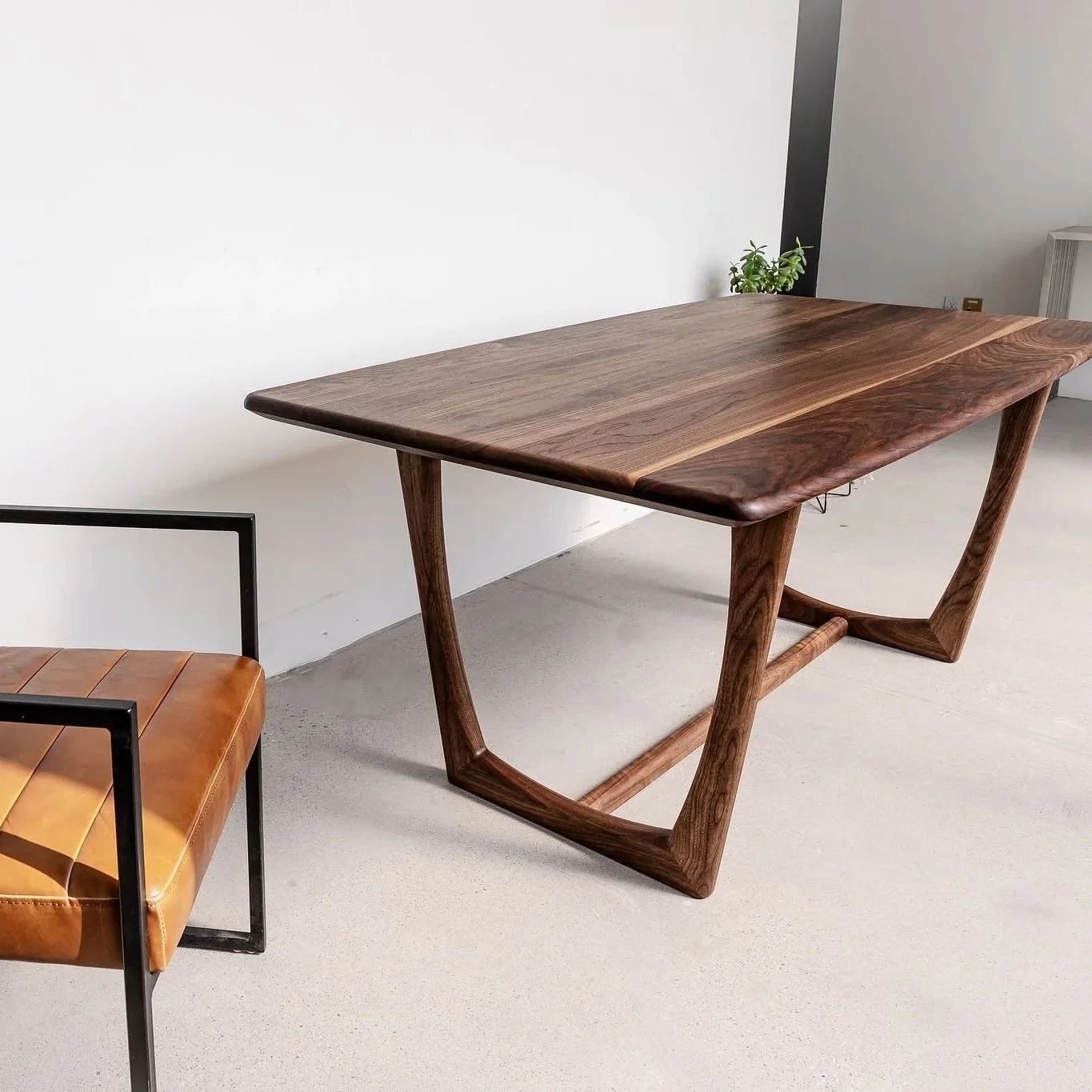
Mid century modern dining tables are known for their clean lines, balanced proportions, and timeless simplicity. Influenced by the design movement of the 1950s and 1960s, these tables focus primarily on function while creating beauty through minimal ornamentation. They are designed with comfort, practicality, and visual harmony in mind. The overall look feels light and intentional, with the rounded features and soft lines it creates a welcoming gathering spot to chare meals and memories.
Characteristics:
Mid century modern tables often feature slim tapered legs, angled bases, gentle curves, and softly rounded corners. The designs lean toward simplicity, allowing the shape and wood grain to stand out. Walnut is the most iconic wood choice for this style, although maple, oak, and teak inspired tones are also common. Edges may be beveled to give a subtle floating effect, and the overall silhouette tends to be sleek and understated.
Best For:
Homes that appreciate a blend of retro influence and modern simplicity. Mid century modern tables work well in smaller dining spaces, condos, and open concept homes where a clean and uncluttered aesthetic is preferred. They pair beautifully with both vintage decor and contemporary interiors, making them one of the most versatile styles available.
Modern Dining Tables
Modern dining tables focus on clean, functional designs and a crisp, uncluttered look. They lean into straight lines, smooth surfaces, and intentional simplicity, often combining different materials for both the top and the base. The result is a calm and balanced presence in the dining space. Modern tables are built to feel refined and current, with simple designs that create beauty through proportion and thoughtful shape rather than ornamentation.
How Modern Differs from Mid Century Modern:
Mid century modern design is known for its curves, tapered legs, and warm retro character. Modern design, on the other hand, shifts toward sharper lines and a more streamlined silhouette. Mid century modern brings a nostalgic softness to a room, while modern tables feel more polished and contemporary with lighter features and straightforward design choices.
Characteristics:
Modern dining tables typically use straight or slightly angled legs, slim profiles, and basic geometric forms. The look is clean and often blends hardwoods like walnut, white oak, or maple with simple bases in wood, steel, or composite materials. Surfaces are usually smooth and free of decorative details, and finishes tend to highlight the natural tone of the wood or introduce simple, modern colors. The overall effect is a table that feels intentional and balanced without overwhelming the space.
Best For:
Homes with minimalist or contemporary interiors, open layouts, or spaces that prefer clean lines and a simple look. Modern tables work well in condos, modern farmhouses, Scandinavian inspired rooms, and any home that appreciates a refined and uncluttered style.
Industrial Dining Tables
Industrial dining tables draw inspiration from old factories, workshops, and urban lofts. They blend raw materials with sturdy construction to create a bold and strong design. This industrial table style highlights the beauty of metal, wood, and simple mechanical details, giving the table a rugged character that feels both practical and stylish.
Characteristics:
Industrial dining tables often combine thick hardwood tops with steel or metal bases. The wood is usually kept natural or finished with a matte or satin sheen to contrast the darker metal elements. Industrial table designs tend to feature straight lines, exposed hardware, steel bases or elements and thick tabletops. Common wood choices for the tabletops include oaks, maples, pines and firs, while bases are often made from black powder coated steel or brushed metal, that can be left to patina naturally. The overall look is sturdy, functional, and slightly rustic without feeling unfinished.
Best For:
Urban lofts, modern farmhouses, contemporary homes, or any space that benefits from a mix of warm wood and cool metal. Industrial dining tables work well in open concept layouts, kitchens with metal accents, or homes that want a centerpiece with a strong visual presence.
Scandinavian Dining Tables
Scandinavian dining tables focus on simplicity, natural beauty, and functional comfort. This style comes from Nordic design principles that value clean lines, bright spaces, and a calm, inviting atmosphere. Originating from a region with long, dark winters, Scandinavian design was created to make homes feel warm, open, and full of light. A Scandinavian table reflects this philosophy, providing a warm and airy feeling to the space it sits in.
Characteristics:
Scandinavian dining tables often feature smooth, rounded edges, slim profiles, and tapered or gently angled legs that give the table a lighter appearance. Heavy ornamentation is avoided, allowing the natural grain and tone of the wood to stand out. Light toned hardwoods such as ash, birch, maple, and white oak are the most common choices. Finishes are typically minimal and natural to help keep the space bright, airy, and connected to nature. The overall style is simple, practical, and comfortable without feeling plain.
Best For:
Homes that appreciate minimal design, bright interiors, and a relaxed, uncluttered look. Scandinavian dining tables work especially well in smaller spaces, open concept homes, condos, and rooms with lots of natural light. They pair nicely with modern, contemporary, and mid century inspired decor, making them a versatile option for many different interior styles.
French Country Dining Tables
French country dining tables bring a sense of charm, warmth, and relaxed elegance to the home. Inspired by the countryside homes of Provence, this style blends rustic simplicity with refined details. The result is a table that feels inviting and lived in, yet still graceful and timeless.
Characteristics:
French country tables often feature gentle curves, carved accents, and soft lines that give the design a welcoming feel. Common elements include turned or curved legs, rounded or oval tabletops, and bases that may be painted or lightly distressed in soft, muted tones. Light woods like oak, beech, and maple are frequently used, with finishes that highlight natural texture while keeping the overall look bright. Some designs pair a stained wood top with a painted base to create subtle contrast.
Best For:
Homes that blend rustic character with refined details. French country tables suit spaces with vintage or cottage inspired décor, bright kitchens, cozy dining rooms, or interiors that favor warm colors and soft textures. They work beautifully in homes that want an approachable, elegant centerpiece with a comfortable, homey feel.
Art Deco Dining Tables
Art deco dining tables bring bold style, geometric design, and a sense of luxury into the home. Inspired by the design movement of the 1920s and 1930s, this style is known for strong shapes, rich materials, and a glamorous look that makes a statement. Art deco tables feel intentional and expressive, adding personality and elegance to your dining space.
Characteristics:
Art deco tables often feature striking geometric patterns, stepped shapes, or symmetrical designs that draw the eye. Materials play a major role in this style, with hardwoods like walnut, oak, and exotic veneers paired with accents such as brass, gold toned hardware, or glossy finishes. Bases may include pedestal shapes, curved forms, or bold angular designs. Tabletops may be round, oval, or rectangular, sometimes incorporating inlays or subtle pattern work to enhance the design.
Best For:
Homes that appreciate dramatic design, vintage charm, or statement pieces that are the focal point of a room. Art deco tables work well in formal dining rooms, modern interiors with rich textures, or spaces that use bold colors, metallic accents, or geometric décor. They pair beautifully with contemporary spaces looking for a statement piece for the room.
Final Thoughts
Choosing the right dining table is more than picking a style you like. It is about finding a piece that supports the way you live, reflects your personal taste, and creates a welcoming place for the people who matter most. Whether you are drawn to bold statement pieces, warm rustic designs, or clean modern lines, each style offers its own personality and purpose. My goal is to work with you to craft a table that fits your home, your lifestyle, and the vision you have in mind.
A well made dining table becomes more than furniture. It becomes the backdrop for celebrations, everyday moments, and lifelong memories. When your table finally takes its place in your home, it should feel like it belongs there and like it was made specifically for the stories that will unfold around it.
If you would like to learn more about what goes into creating a high quality table, I invite you to explore my Dining Table Build Guide, along with the other articles and resources available on my blog for more inspiration and insight.
If you are ready to start the process or have questions about a custom piece, please reach out through my contact form. I would be happy to guide you through the next steps and help bring your custom dining table to life.